Smart Key vs. Transponder Key: What's the Difference?
Both have chips. Both need programming. But the price, replacement process, and security differ a lot. Here's the breakdown.
Transponder keys: chip inside a traditional key
A transponder key looks like a normal metal key with a thicker plastic head. Inside that head is a tiny chip that broadcasts an ID when it's near the ignition cylinder. You still insert and turn the key — the chip just unlocks the immobilizer at the same moment.
Smart keys: proximity fobs with no metal
A smart key (sometimes called a proximity fob or push-to-start fob) doesn't go into an ignition at all. The car detects the fob's presence wirelessly when you walk up. Press the brake, push the start button, drive away.
Why smart keys cost more
Smart keys use stronger encryption (often rolling-code or AES-based) and have more electronics inside — a transmitter, a low-frequency receiver, and sometimes motion sensors. Blanks alone can cost $80–$300 depending on the brand.
Replacement process
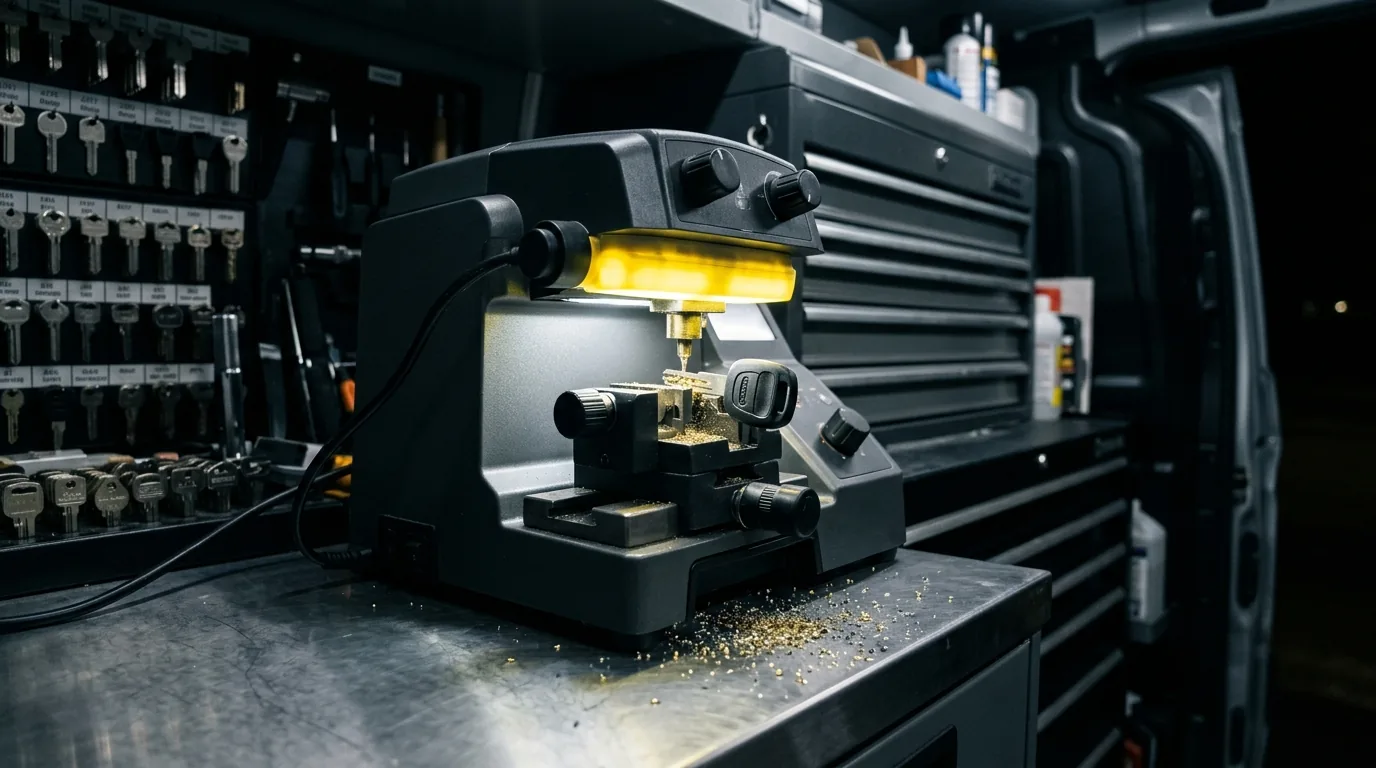
Transponder keys: cut a blank, program the chip to the immobilizer via OBD-II. 15–30 minutes. Smart keys: cut a hidden mechanical backup blade (if equipped), pair the fob to the vehicle's wireless module, then program any additional remotes. 30–60 minutes for most jobs.
Both key types are well within what a mobile automotive locksmith can handle. Call us with your year/make/model and we'll confirm the type and quote it on the phone.